
There is a moment most homeowners have experienced, though few talk about it openly. The painters finish, the furniture goes back, the room looks exactly as planned, and yet something feels flat. The colour is right, the finish is clean, but the walls have nothing to say. That feeling is not about the shade chosen or the lighting above. It is about what the surface itself is doing, or rather, what it is not doing.
Wall texture paint is the element most people skip, and it is almost always the reason a room stops short of feeling complete. Once you understand what texture brings to a wall painting design, going back to plain flat paint becomes very difficult.
Texture Is Not a Decorative Afterthought
A common misconception is that wall texture paint is something you add when you want a particular look, exposed brick effect, sand finish, something rustic. That is one use of it, but it is not the whole picture.
- Texture changes how a wall interacts with light. A smooth flat wall reflects light uniformly. A textured wall catches it at varying angles, creating subtle shifts in tone and shadow across the surface.
- This gives depth to a colour that would otherwise sit one-dimensionally on the wall. A beige that looks unremarkable in flat paint can look genuinely rich with the right texture beneath it.
- This is why wall painting design cannot be separated from surface decisions. The two work together, and planning one without the other leaves results to chance.
Types of Wall Texture Paint Worth Knowing
There are various textures worth knowing before you finalise a design. Take a look at the following trending options:
Sand Finish
This is one of the more understated options and one of the most versatile. A sand texture adds a fine, slightly gritty surface that catches light softly. It suits living rooms, bedrooms, and halls, spaces where you want warmth without loudness. In a wall painting design that uses neutrals or earth tones, sand finish texture adds quiet complexity.
Knockdown Texture
This creates a layered, mottled effect on the wall surface, with peaks and valleys that give the impression of natural stone or aged plaster. It suits larger walls and open spaces where the texture has room to read properly. Knockdown finishes work particularly well in dining rooms and feature walls where a bold wall painting design is intended.
Stucco Finish
Stucco is coarser and more pronounced. It has a Mediterranean quality, thick, deliberate, unapologetically textured. This finish suits homes with a rustic or heritage-influenced interior design direction. In deep, saturated shades, a stucco wall painting design becomes the focal point of the entire room.
Smooth Matte with Subtle Texture
Not all texture needs to be visible from across the room. A very fine-grain texture under a matte paint creates a surface that feels premium even when the texture itself is barely perceptible. This option is ideal for bedrooms and study spaces where calm and quiet are the design priority.
How Wall Painting Design Changes When Texture Is in the Picture
Colour behaves differently on textured surfaces. Lighter shades tend to look even softer because the texture diffuses the light rather than reflecting it cleanly.
- Darker shades, on the other hand, gain intensity; the shadowed recesses in the texture deepen the perceived tone of the colour.
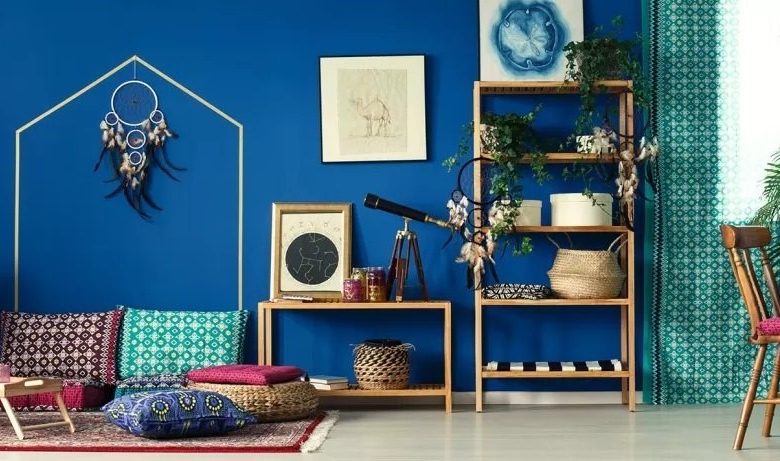
- This means that if your wall painting design calls for a statement wall in a deep shade (navy, forest green, terracotta), a textured surface will amplify the effect considerably.
- If you are using softer, pastel-adjacent shades across a larger space, a fine texture will add dimension without competing with the colour.
- Feature walls are where texture genuinely earns its place. A single wall with a pronounced texture and a considered shade draws the eye immediately and gives the room a point of focus that no amount of furniture arrangement can replicate.
Texture paint is available in a range of finishes, from subtle matte effects that complement understated interiors to more pronounced patterns suited to feature walls. Before choosing a finish, consider the room’s lighting, wall condition, existing colour palette and overall interior style. Testing a sample on the wall can help you understand how the texture and colour interact in natural and artificial light.
Choosing the Right Finish for Your Space
The practical side of wall texture paint involves matching the finish to the room’s function. High-traffic areas like halls and entryways benefit from textures that are easy to maintain and resistant to scuffing. Smooth matte or fine sand finishes work better here than deeply pronounced knockdown textures, which collect dust more readily.
For bedrooms and living rooms where maintenance is less of a concern, the choice can be driven purely by the wall painting design intent.


