
Hi3D V3.0: Making AI 3D Creation More Accessible for Businesses, Educators, and Everyday Creators

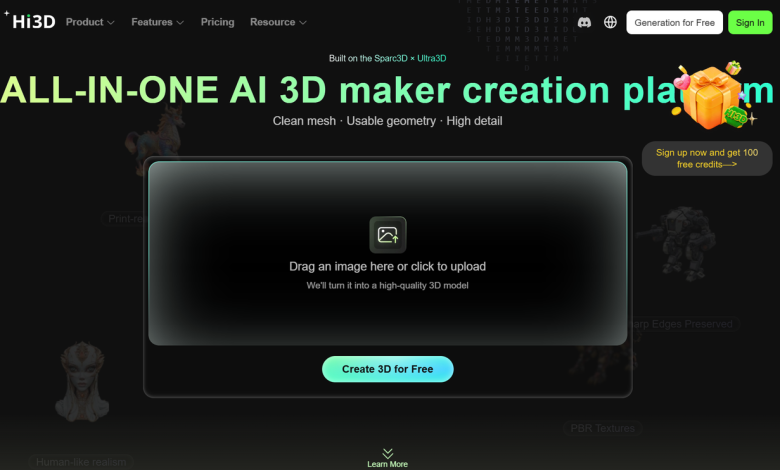
AI 3D Technology Is Expanding the Possibilities of Digital Creation
3D printing is gradually becoming part of more industries and everyday creative activities. What was once mainly used for industrial prototyping and professional manufacturing is now being explored by product developers, educators, artists, small businesses, and individual creators.
However, the growth of 3D printing also brings a new challenge: more people need ways to create 3D content without spending years learning complex modeling workflows.
A powerful 3D printer can produce physical objects, but every printed object starts with a digital model. For many users, creating this model remains the most difficult part of the process.
AI 3D technology is helping change this situation. By allowing users to generate models from images and text, AI reduces the technical barriers between an idea and a finished design. More importantly, advanced AI tools are beginning to support not only model creation but also texture improvement and printing preparation.
Hi3D is built for this changing environment. It provides AI-powered features that help users transform creative ideas into 3D models, improve visual details, and prepare models for physical production.
With the official release of Hi3D V3.0, the platform takes another step forward by improving model reconstruction, structure understanding, and texture quality. These upgrades allow different types of users to explore AI 3D creation more efficiently, from businesses and educators to independent creators.
1. Helping Businesses Turn Product Ideas into Faster Prototypes
For businesses, product development often involves repeated testing and improvement.
Before launching a product, companies usually need to explore different designs, evaluate appearance, and create prototypes. Traditional 3D modeling workflows can slow down this process because every adjustment requires additional modeling work.
AI 3D tools provide businesses with a faster way to visualize concepts.
1.1 Creating product concepts from images and ideas
Many product ideas begin with simple references.
A company may have a concept sketch, a design image, or a visual direction for a new product. Turning these references into 3D models traditionally requires professional modeling skills.
Hi3D helps simplify this process through AI generation.
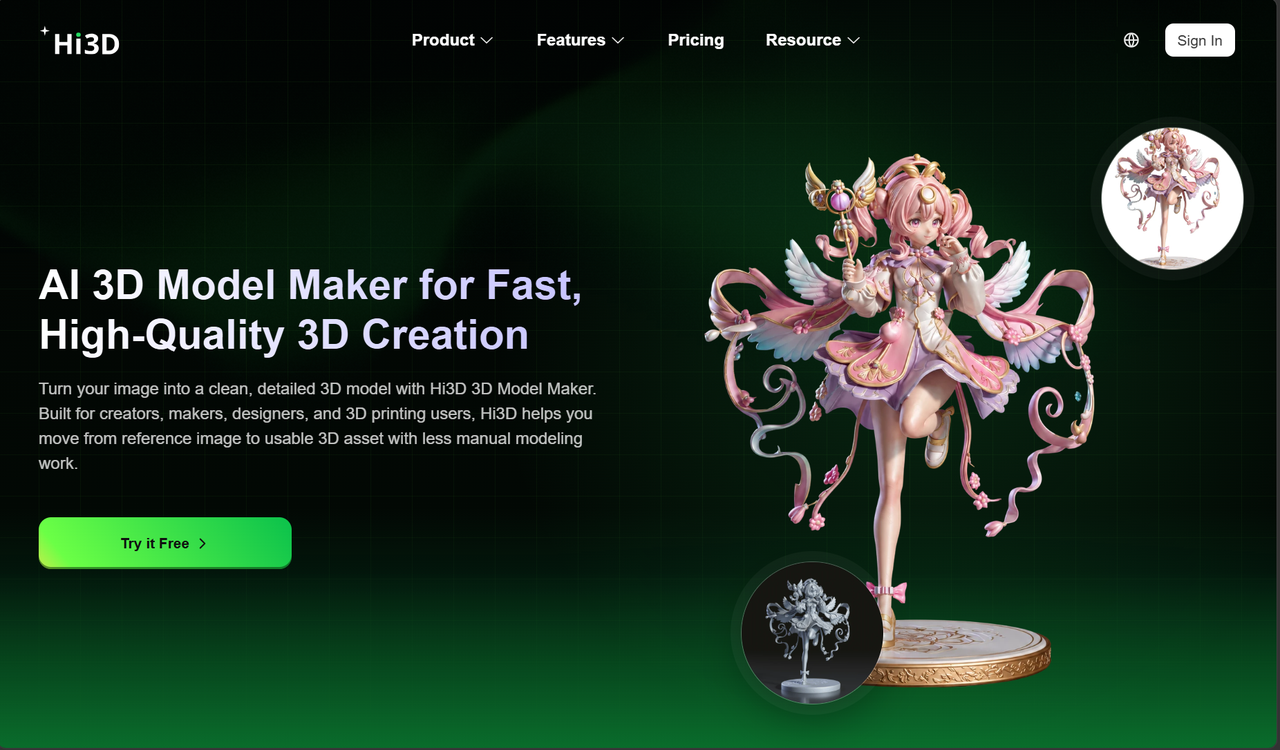
The image to 3D model AI function allows businesses to transform visual references into three-dimensional models, creating a faster way to evaluate product concepts.
This can be useful during early development stages. Teams can explore different designs, compare variations, and make decisions before investing significant resources into production.
Instead of spending time building every model from scratch, creators can use AI-generated models as starting points for further refinement.
1.2 Supporting customized product development
Modern consumers increasingly value personalized products.
From customized accessories to unique decorative objects, businesses need flexible ways to respond to different customer needs.
Hi3D helps companies explore customized 3D creation by making model generation more accessible.
As a 3D printer model maker, Hi3D provides a practical approach for businesses that want to connect digital design with physical manufacturing.
2. Supporting Education and Learning Through Easier 3D Creation
Education is another area where 3D technology continues to grow.
3D models can help students understand complex concepts through visual and physical experiences. They can be used in science, engineering, art, and creative learning projects.
However, creating educational 3D content can be challenging for teachers and students who do not have professional modeling experience.
AI-assisted creation provides a simpler alternative.
2.1 Making 3D learning more approachable
For students, the biggest challenge is often not creativity but technical knowledge.
Traditional 3D modeling software can require significant training before users can create useful models.
Hi3D lowers this barrier by allowing users to start with images and text descriptions.
Students can explore ideas, generate models, and better understand the relationship between digital designs and physical objects.
This makes 3D creation more suitable for classrooms, workshops, and creative learning environments.
2.2 Creating teaching materials more efficiently
Educators often need customized visual materials.
A teacher may want a specific model to explain a scientific structure, historical object, or design concept.
Instead of searching for existing models or creating everything manually, educators can use AI-assisted generation to develop suitable resources more efficiently.
Hi3D provides a way to create educational 3D content while keeping the process simple.
3. Empowering Independent Creators to Explore More Creative Possibilities
Independent creators often face different challenges compared with large companies.
They may have strong creative ideas but limited time, resources, or technical experience.
For artists, makers, and hobbyists, AI 3D tools provide new opportunities to experiment and create.
3.1 Transforming imagination into 3D models
Many creators start with sketches, illustrations, or simple concepts.
However, moving from a creative idea to a 3D object can be difficult without modeling experience.
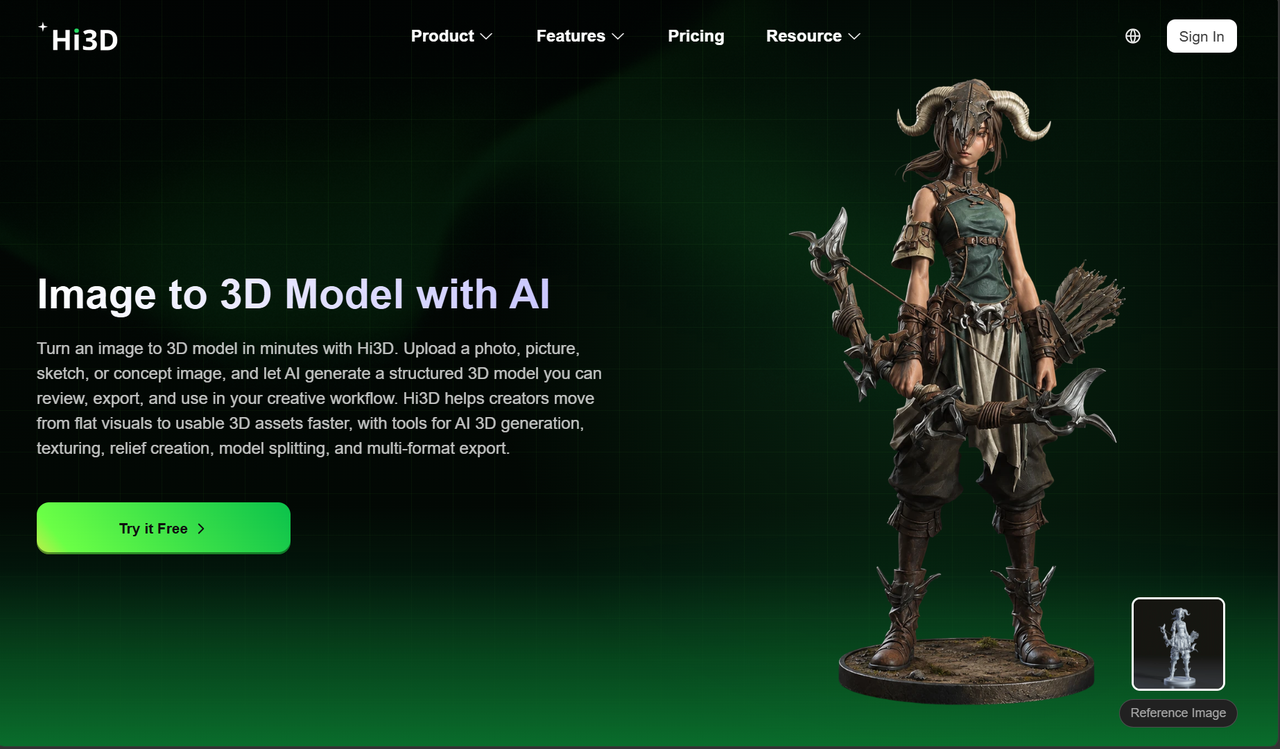
Hi3D helps bridge this process by supporting AI-based 3D generation.
Users can provide images or descriptions and create models that can be further developed.
This makes experimentation easier because creators can test more ideas without spending excessive time on initial modeling.
3.2 Improving creative expression through AI textures
A model’s appearance often determines how audiences experience the final creation.
Artists and creators need surfaces, colors, and details that match their original vision.
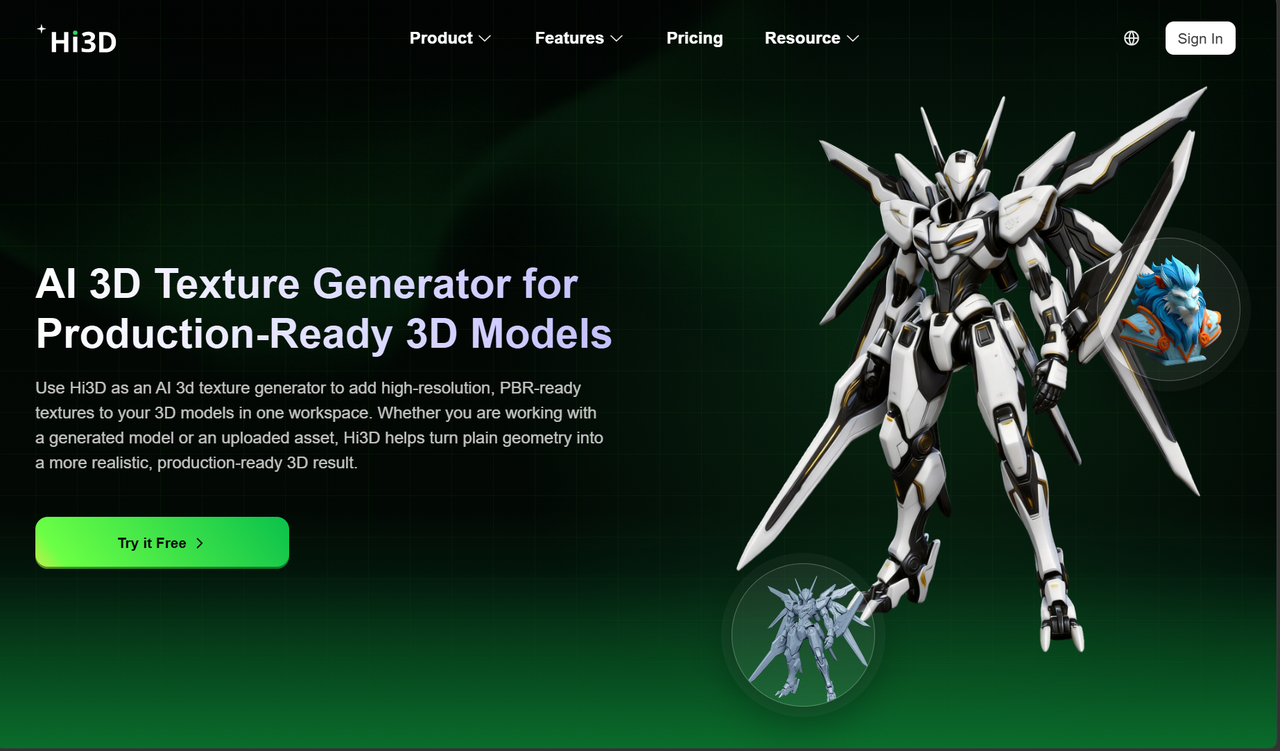
Hi3D provides AI texture generation tools that help improve model appearance.
The AI 3D model texturing feature assists creators in adding visual details and enhancing generated models.
With better texture quality, creators can produce more expressive digital assets for personal projects, collectibles, and creative products.
4. Completing the Journey from AI Models to Physical Objects
Creating a model is only one part of the 3D printing process.
Different users may face challenges when preparing models for printing, especially when dealing with multiple colors, large structures, or complex designs.
Hi3D provides additional tools that help users move from digital creation to physical production.
4.1 Supporting multi-color printing
Color is important for many printed objects.
Characters, decorations, and customized products often require different colors to represent their original designs.
Hi3D’s multi-color printing function helps convert textured models into printable multi-color objects by generating color regions, matching filament colors, and reducing manual preparation.
This allows users to better preserve the appearance of digital designs.
4.2 Simplifying complex model preparation
Large models may require separation before printing.
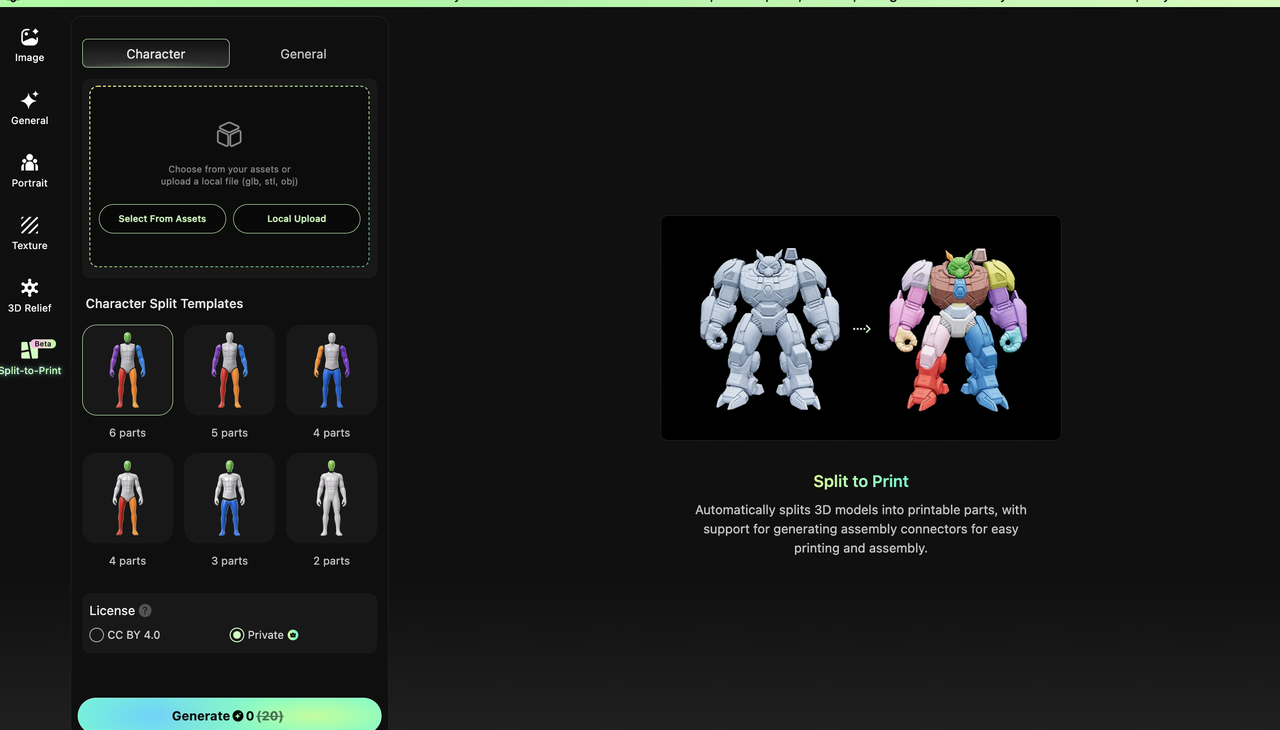
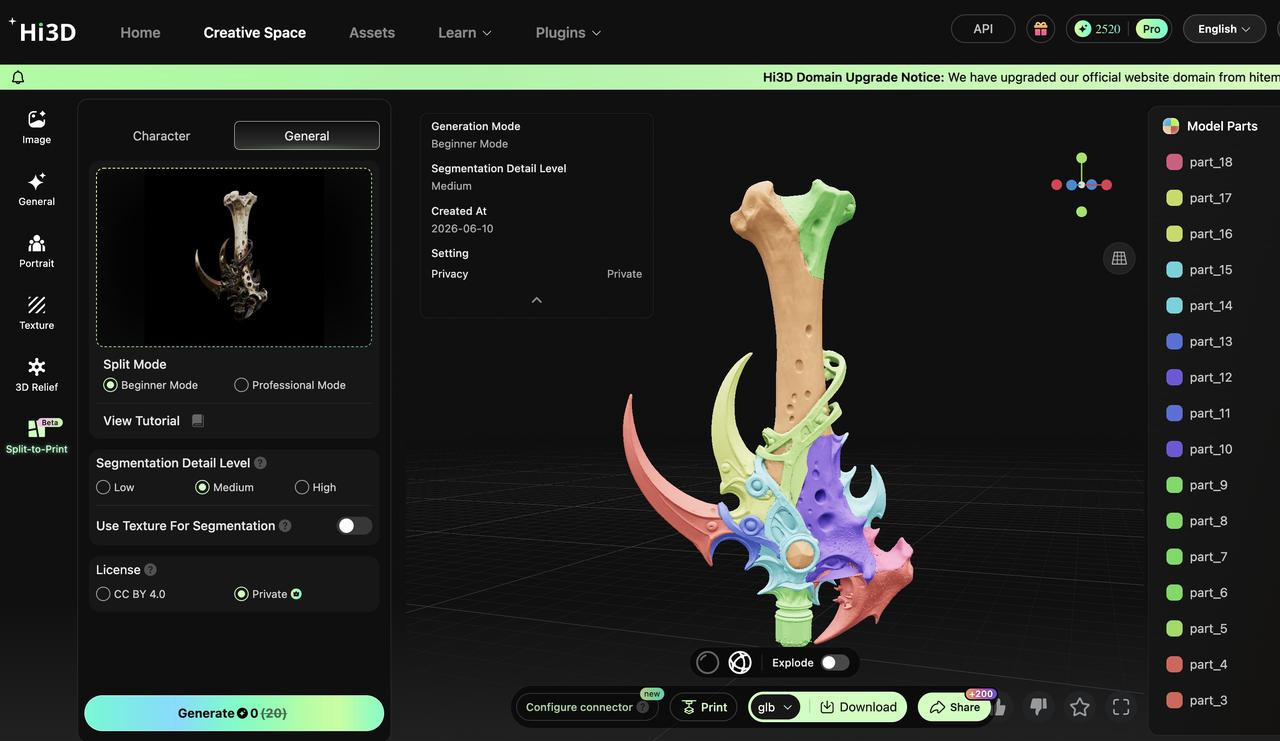
Hi3D’s split-for-printing function helps divide models into printable sections and generate connectors for easier assembly.
The smart arrangement feature helps users organize models on the printing platform, recommend suitable orientations, and export 3MF files with recommended slicer settings.
These functions make AI-generated models more practical for different users.
 |
 |
5. Hi3D V3.0 Official Release: Bringing AI 3D Creation Closer to Real Applications
The official launch of Hi3D V3.0 represents an important development in AI 3D creation.
As more industries adopt 3D workflows, users need tools that can provide more than simple model generation.
They need models with better accuracy, stronger details, and improved usability.
Hi3D V3.0 focuses on these requirements by improving the core capabilities behind AI-generated models.
5.1 Improving AI-generated model reliability
A generated model is valuable only when it can support the next stages of creation.
If a model contains structural problems or missing details, users still need to spend significant time fixing it manually.
Hi3D V3.0 improves reconstruction quality and structure understanding to reduce these limitations.
The goal is to make AI-generated models more suitable for real creative and production workflows.
5.2 Supporting different types of creators
Different users have different goals.
Businesses may need faster prototypes.
Educators may need easier teaching materials.
Creators may want more freedom to explore ideas.
Hi3D V3.0 provides a flexible AI 3D workflow that can adapt to these different needs.
6. Hi3D V3.0 Core Upgrade: Building Stronger Foundations for AI 3D Creation
The improvement of AI 3D technology depends on better understanding of objects.
A model is not only a visual shape. It contains structure, depth, details, and relationships between different parts.
Hi3D V3.0 introduces several upgrades designed to improve these aspects.
6.1 Higher-resolution reconstruction for detailed models
Hi3D V3.0 increases geometric reconstruction resolution to 2048³ voxel-level and becomes the first commercially available AI 3D model with this level of resolution.
This improvement allows AI to capture more information during reconstruction.
The system can better preserve complex shapes, small components, and important structural details, improving the quality of generated models.
For users across different industries, better reconstruction creates more reliable starting points.
6.2 Stronger understanding of complex objects
Many objects contain hidden areas that cannot be fully seen from one image.
AI needs to understand how different parts connect and maintain consistency from multiple viewpoints.
Hi3D V3.0 improves cross-view structure reasoning, helping generated models maintain better consistency from different angles.
This makes AI-generated models more suitable for practical applications.
7. Hi3D V3.0 Evolution and Industry Impact: Building a Wider AI 3D Ecosystem
Hi3D V3.0 is based on continuous improvements across previous versions.
The development process reflects how AI 3D technology is moving from simple generation toward broader creative support.
7.1 From V1.0 to V3.0: A continuous improvement process
Hi3D V1.0 introduced a commercially available 1536³ voxel-resolution image-to-3D model, improving detailed structure reconstruction.
Hi3D V2.0 focused on integrated geometry and texture generation, improving structural completion and creating a more complete generation experience.
Hi3D V3.0 continues this progress by improving geometric precision, complex structure reasoning, texture quality, and practical functions including smart splitting, multi-color printing, and arrangement tools.
This evolution shows how AI 3D tools are becoming more connected with real user requirements.
7.2 Expanding applications across industries
High-quality 3D models are becoming increasingly important in areas such as 3D printing, digital art, game and film production, jewelry design, collectibles, education, e-commerce content, and industrial design.
Hi3D V3.0 helps more users participate in these fields by reducing technical barriers and improving creation efficiency.
7.3 Experience Hi3D V3.0 with a 48-hour free trial
Hi3D V3.0 is officially released with improvements in model reconstruction, texture generation, and practical workflow support.
Users can experience Hi3D V3.0 through a 48-hour free trial, with no usage limit during the experience period. This allows creators, businesses, and educators to explore the upgraded features and test different ideas freely.
Start exploring Hi3D V3.0 today and discover a simpler way to bring ideas from imagination into detailed 3D creations.


